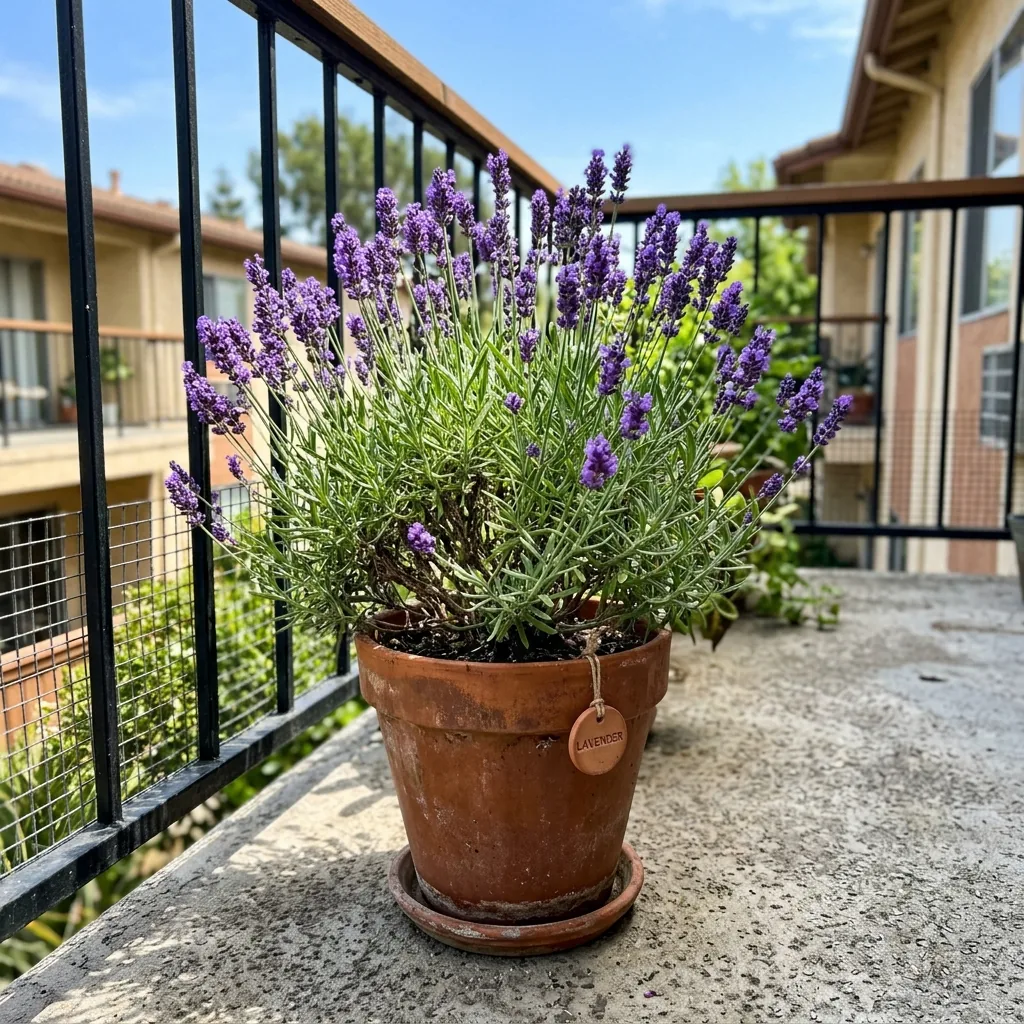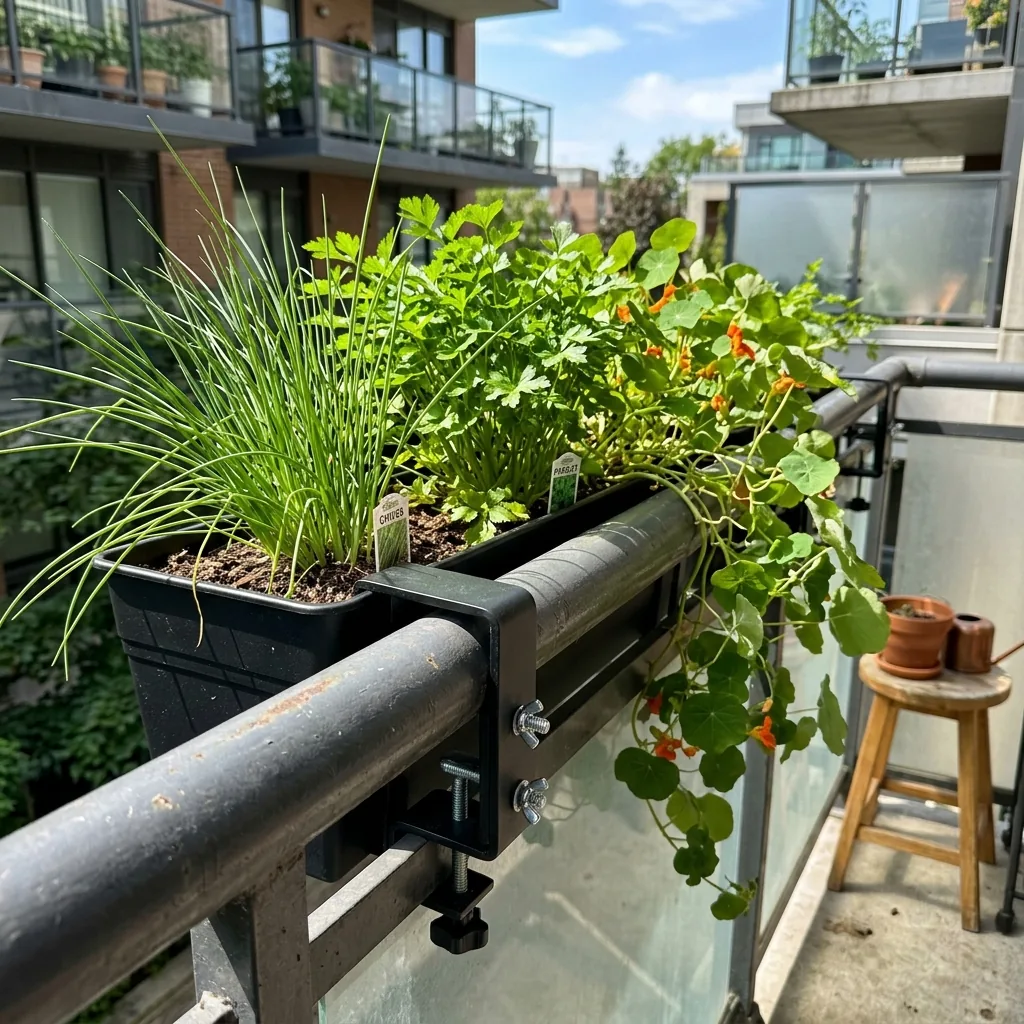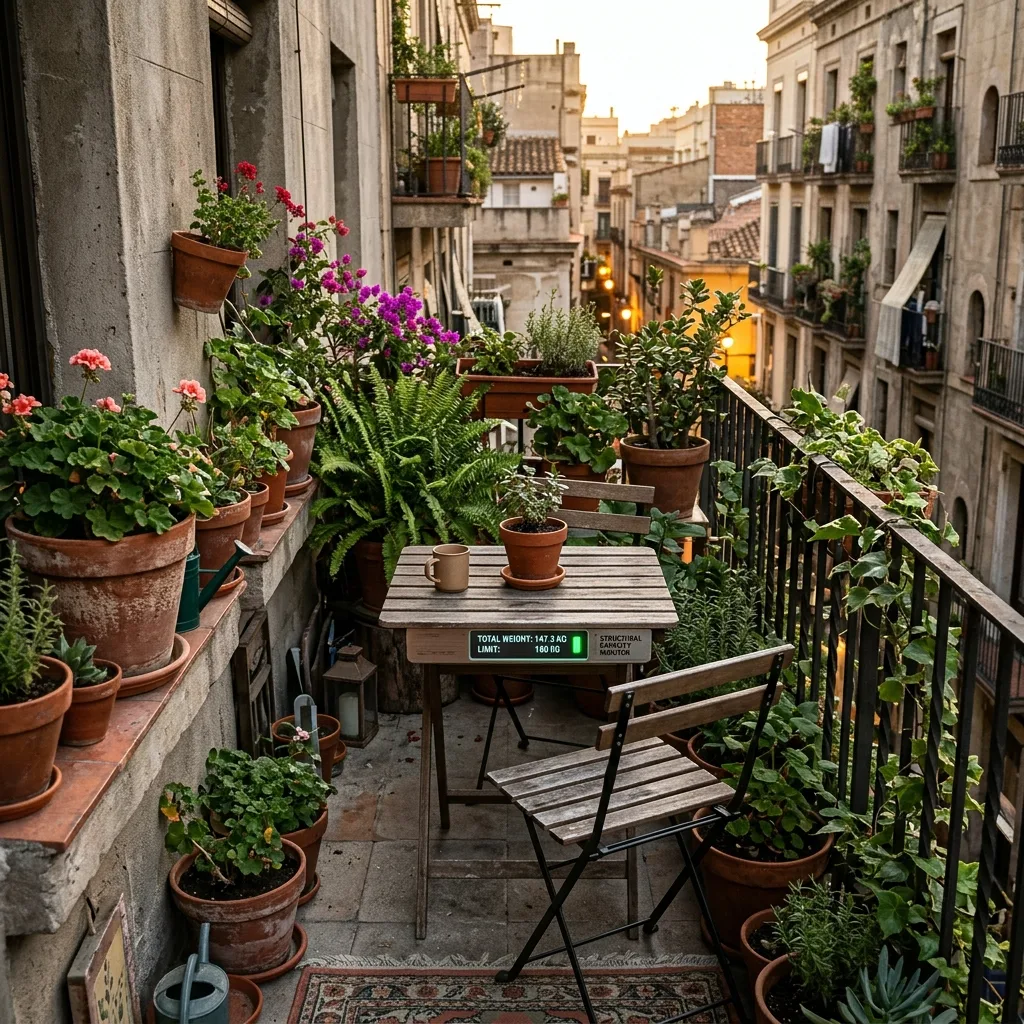
If you’ve ever stood on your apartment balcony surrounded by terracotta pots, bags of compost, and a cast-iron table and thought “am I about to fall through this thing?” — this guide is for you. Knowing your balcony weight limit in kg is the single most important calculation every European renter should run before buying a single planter. Most modern balconies are engineered to carry 250–400 kg/m² under Eurocode EN 1991-1-1, but wet soil, water-logged containers, and furniture eat through that budget frighteningly fast.
Why trust this guide? In my first Berlin apartment, I stacked five 40-litre bags of compost against the railing of a 1970s Plattenbau balcony. The floor was rated 2.5 kN/m² — roughly 255 kg/m² — and my 3 m² balcony could only take 765 kg total. Five bags of saturated compost plus three large ceramic pots plus my own weight came dangerously close to 600 kg. I didn’t fall. But I moved everything indoors that night and never ignored load limits again.
Table of Contents
- What Does kN/m² Mean for Your Balcony?
- Balcony Load Limits by European Building Type
- How Much Does Wet Soil and Compost Weigh?
- Step 1: Measure Your Balcony in m²
- Step 2: Calculate Your Total Load Capacity in kg
- Step 3: Audit Your Garden Weight (Metric Cheat Sheet)
- My Experience with Balcony Weight on a 4 m² Balcony
- Common Mistakes European Renters Make
- Lightweight Alternatives: Same Garden, Half the Weight
- When to Call Your Building Manager
What Does kN/m² Mean for Your Balcony?
European building codes use kilonewtons per square metre (kN/m²) instead of the American PSF system. For a renter, you only need one conversion to make this useful:
1 kN/m² = approximately 102 kg/m²
Under Eurocode EN 1991-1-1, balconies fall into Category C (areas of assembly) with a minimum live load of 2.5–4.0 kN/m², depending on the building type and year of construction. In plain terms:
- 2.5 kN/m² = 255 kg/m² — older builds, Plattenbau, panel block construction
- 3.0 kN/m² = 306 kg/m² — most post-1990 residential concrete
- 4.0 kN/m² = 408 kg/m² — modern builds post-2010, reinforced slab
This total capacity includes you, your guests, furniture, and every pot on the floor. Allocating more than 30% of that total to plants and containers is where most amateur balcony gardeners cross into structurally dangerous territory.
Quick Answer: How much weight can a European apartment balcony hold?
Under Eurocode EN 1991-1-1, most residential balconies are rated for 2.5–4.0 kN/m² (255–408 kg/m²). On a standard 4 m² balcony, the theoretical maximum is roughly 1,000–1,600 kg total. In practice — accounting for 2 adults, a bistro set, and a safety margin — keep your plant load under 60–80 kg/m². Older Plattenbau buildings and Victorian cast-iron Juliet balconies typically sit at the lower end. Always confirm with your property manager before placing anything heavier than 50 kg in one spot.
Balcony Load Limits by European Building Type
Not all European balconies are the same structural animal. A 1960s East German panel block is completely different from a 2020 Amsterdam new-build.
| Building Type | Typical Rating | kg/m² | Safe Plant Budget* | Notes |
|---|---|---|---|---|
| Modern concrete slab (post-2010) | 3.5–4.0 kN/m² | 357–408 kg/m² | 70–80 kg/m² | Most new DE/NL/FR builds |
| Post-1990 reinforced concrete | 3.0 kN/m² | 306 kg/m² | 60–70 kg/m² | Standard EU residential |
| Plattenbau / panel block (1960–1990) | 2.5 kN/m² | 255 kg/m² | 40–55 kg/m² | Check for concrete spalling |
| Haussmann / pre-war masonry (FR/BE) | 2.0–2.5 kN/m² | 204–255 kg/m² | 30–45 kg/m² | Common in Paris, Brussels, Lyon |
| UK Victorian iron Juliet balcony | 1.5–2.5 kN/m² | 153–255 kg/m² | 15–30 kg/m² | Very conservative — railing-only |
| Steel-frame with composite deck | 2.5–3.5 kN/m² | 255–357 kg/m² | 50–65 kg/m² | Distribute load evenly across frame |
*Safe plant budget accounts for 2 adults (~160 kg) and basic furniture (~30 kg) already consuming a share of capacity.
How Much Does Wet Soil and Compost Weigh?
This is where most people get blindsided. Dry soil feels manageable at the garden centre. After a rainstorm, it’s a completely different number.
Weight of growing media per litre:
| Medium | Dry (kg/litre) | Saturated (kg/litre) |
|---|---|---|
| Standard topsoil | 0.7–0.9 | 1.2–1.5 |
| Peat-based compost | 0.4–0.5 | 0.9–1.1 |
| Perlite / pumice | 0.1–0.15 | 0.2–0.3 |
| Coco coir | 0.3–0.4 | 0.8–1.0 |
| Sand (drainage layer) | 1.4–1.6 | 1.8–2.0 |
A 40-litre bag of standard topsoil weighs roughly 30 kg dry. After two days of rain, that same volume can weigh 50–60 kg. Put six of those bags on a 3 m² Plattenbau balcony rated at 2.5 kN/m² (max plant budget ~230 kg), and you’ve burned through most of your budget on soil alone — before a single pot, a chair, or yourself.
The safest switch you can make today: replace topsoil with a coco coir + 20% perlite mix. It drains better, it’s lighter, and it saturates at roughly 0.6 kg/litre instead of 1.4 — less than half the weight.
Step 1: Measure Your Balcony in m²
Get a tape measure. Multiply length × width in metres.
- 2 × 1.5 m = 3 m² (common in 1970s–1990s blocks across Germany and Poland)
- 3 × 2 m = 6 m² (newer builds, ground-floor terraces in NL/BE)
- 1 × 3 m long narrow = 3 m² (typical French and Belgian layout)
If your balcony has a curved or L-shaped footprint, use the formula for the closest rectangle and subtract the unused corner area.
Step 2: Calculate Your Total Load Capacity in kg
The Formula
Total safe plant load = (Rating kN/m² × 102 × area m²) × 0.30
The 0.30 is your plant safety factor — it reserves 70% for people, furniture, and structural margin.
Example: 3 m² Plattenbau balcony, rated 2.5 kN/m²
- Total capacity: 2.5 × 102 × 3 m² = 765 kg
- Reserve for 2 adults + bistro table: 160 + 25 = 185 kg
- Remaining: 765 − 185 = 580 kg headroom
- Plant safety cap (30% of total): 765 × 0.30 = 230 kg
- Your practical plant budget: 230 kg
Example: 6 m² modern build, rated 3.5 kN/m²
- Total capacity: 3.5 × 102 × 6 = 2,142 kg
- Reserve people + furniture: ~250 kg
- Plant safety cap (30%): 2,142 × 0.30 = 643 kg
- Practical plant budget: 643 kg — you can garden seriously here.
Micro-Fail Warning: Do not use the dry weight figures from the shop receipt to run this calculation. Always use saturated weights. I once calculated my load using bag weights off the shelf, only to discover after a week of rain that my 4-pot “safe” setup was 40 kg over estimate.
Step 3: Audit Your Garden Weight (Metric Cheat Sheet)
Use wet weights only. Dry weights are a garden-centre fantasy.
| Item | Volume / Size | Wet Weight (kg) |
|---|---|---|
| Small terracotta pot + soil + plant | 20–25 cm, ~3 litres | 4–7 kg |
| Medium glazed pot + soil + plant | 30–35 cm, ~12 litres | 15–25 kg |
| Large ceramic pot + soil + mature plant | 45–50 cm, ~40 litres | 55–85 kg |
| 30-litre fabric grow bag + coco/perlite | 30 litres | 18–22 kg |
| Cast-iron bistro table + 2 chairs | — | 40–65 kg |
| Aluminium bistro table + 2 chairs | — | 8–15 kg |
| Acacia decking tiles (1 m²) | 4–6 tiles/m² | 12–18 kg/m² |
| Wooden raised planter box (80×40 cm) | ~50 litres capacity | 45–70 kg |
| Adult person (average EU) | — | 75–90 kg |
How Do You Calculate Balcony Weight Limit in kg for a European Apartment?
Multiply your balcony area in m² by the rated load in kN/m², then by 102 to convert to kilograms. That gives you the maximum theoretical capacity for your slab. From there, subtract an allowance of approximately 175–220 kg for two adults and light furniture. Apply a 30% plant safety cap — never allocate more than 30% of total slab capacity to garden weight alone. For a typical 4 m² balcony rated at 3.0 kN/m²: 4 × 3 × 102 = 1,224 kg total. Plant budget: 1,224 × 0.30 = 367 kg maximum, though realistically you will work with around 250–280 kg once people and furniture are accounted for. Always place the heaviest containers near the building wall — the load-bearing capacity of a cantilevered slab is significantly stronger at the wall-side edge than at the railing edge. A single 60 kg ceramic pot at the railing exerts far more structural stress than the same pot placed flat against the facade wall.
My Experience with Balcony Weight on a 4 m² Balcony
My current Amsterdam apartment has a 4 m² north-facing concrete balcony, rated at 3.0 kN/m² — confirmed with the VvE (Vereniging van Eigenaren, the building’s owners association). That gives me roughly 1,224 kg total capacity, with a practical plant budget of around 280 kg after subtracting the rattan sofa, a small side table, and two adults.
The north orientation killed any ambitions for tomatoes or peppers — which actually worked in my favour for load calculations. North-facing balconies suit hostas, ferns, and climbing hydrangeas, all of which grow happily in 12–20 litre fabric grow bags rather than heavy ceramic pots. My current setup: six 20-litre grow bags at 14–18 kg each (wet), two terracotta herb pots at 6 kg each, and a climbing hydrangea in a 25-litre coco coir mix at approximately 19 kg. Total plant load: ~120 kg. Well within budget.
The single most expensive decision I reversed: a 45-litre glazed ceramic statement pot I bought for €89 at a garden market. Beautiful piece. Empty weight: 22 kg. Filled with standard potting mix, wet: 78 kg — a quarter of my entire plant budget for one pot. I sold it and replaced it with a 40-litre polypropylene pot (1.1 kg empty, €14 at IKEA) filled with 70% coco coir. Wet weight: 28 kg. Nearly identical visual impact. Savings: 50 kg and €75.
Common Mistakes European Renters Make
1. Calculating with dry soil weights
The 40-litre bag in the shop weighs 18–22 kg. After two days of steady rain, that same volume of standard compost holds 50–55 kg of saturated mass. Always use saturated weight — multiply your dry bag weight by 1.8 if you can’t find the wet figure.
2. Piling the heaviest pots near the railing
Balconies are cantilevered from the building. Weight at the far edge (near the railing) creates disproportionately more rotational stress on the wall connection than identical weight placed near the door. If you own a 60 kg planter, it belongs against the wall — not on the railing shelf you bought from HORNBACH. This single placement rule can add months of safe use to a borderline-loaded balcony.
3. Forgetting decking tiles
A full 3 m² layer of wet acacia decking tiles adds 40–55 kg of permanent dead load before you’ve placed a single plant. That weight is always there, reducing your live load budget every single day. Lightweight composite or polypropylene click-deck tiles (3–5 kg/m² wet) are the smarter choice for weight-sensitive balconies.
Pro-Tip Checklist: – Weigh each new pot before placing it (kitchen scale for smaller ones, bathroom scale for larger ones) – Take a photo of your current layout and annotate each item’s wet weight in kg – Review the total every spring before adding new season plants
Lightweight Alternatives: Same Garden, Half the Weight
Switching from ceramic and terracotta to modern lightweight containers is the single highest-impact swap available. No structural engineering knowledge required — just different shopping choices.
| Swap This | Wet Weight | For This | Wet Weight | Saved |
|---|---|---|---|---|
| Large glazed ceramic (45 cm) | 78 kg | 40L polypropylene pot | 28 kg | 50 kg |
| Standard topsoil (40L bag) | 55 kg | Coco coir + 20% perlite | 26 kg | 29 kg |
| Wooden raised bed (80×40 cm) | 65 kg | Fibreglass raised trough | 35 kg | 30 kg |
| Cast-iron bistro set | 55 kg | Aluminium bistro set | 11 kg | 44 kg |
| Acacia deck tiles (3 m²) | 48 kg | Composite click-deck | 14 kg | 34 kg |
For Plattenbau or Haussmann balconies with a strict plant budget of 40–55 kg/m², this table is not optional — it’s the only way to have a real balcony garden without risking the structure. See our complete balcony herb garden for specific lightweight container recommendations, and our smart balcony herb gardens guide for self-watering systems that avoid heavy ceramic entirely.
When to Call Your Building Manager
Skip the estimate and call directly if any of these apply:
- Your balcony is pre-1960 construction
- You notice cracks in the slab floor or at the wall junction where the balcony meets the facade
- The floor has a noticeable sag or bounce when you walk across it
- You want to place anything heavier than 80 kg in a single location
- You are in a UK Victorian property or a French immeuble haussmannien with cast-iron or wrought-iron balcony structures
In Germany, the relevant document is the Nutzlast specification (under DIN EN 1991-1-1 / Eurocode 1) — your Hausverwaltung is required to provide it on request. In the Netherlands, ask the VvE (Vereniging van Eigenaren). In France, contact the syndic de copropriété and request the carnet d’entretien. In the UK, ask the freeholder or managing agent for the structural engineer’s report.
Do not rely on internet articles — including this one — for your specific building’s load rating. Use this guide to ask better questions.
A 4 m² European balcony can absolutely support a lush container garden. The numbers work in your favour as long as you run the calculation first, use saturated weights, place heavy pots at the wall edge rather than the railing, and switch to lightweight growing media. Most renters who switch from topsoil to coco/perlite and from ceramic to polypropylene containers immediately free up 100–150 kg of capacity — enough to double the number of plants safely.
Take five minutes now: measure your area, call your building manager for the Nutzlast, run the three-step formula above. That’s the whole job.
Safety Disclaimer
Balcony load ratings are structural specifications set by engineers at construction. The figures in this article are based on Eurocode EN 1991-1-1 and represent typical residential ranges — they are not a substitute for the actual rated specification of your specific building. If in doubt, contact your property manager or a structural engineer before placing heavy loads. Signs of structural stress (cracks, sagging, unusual sounds when weight is applied) require immediate professional inspection and must not be ignored.