
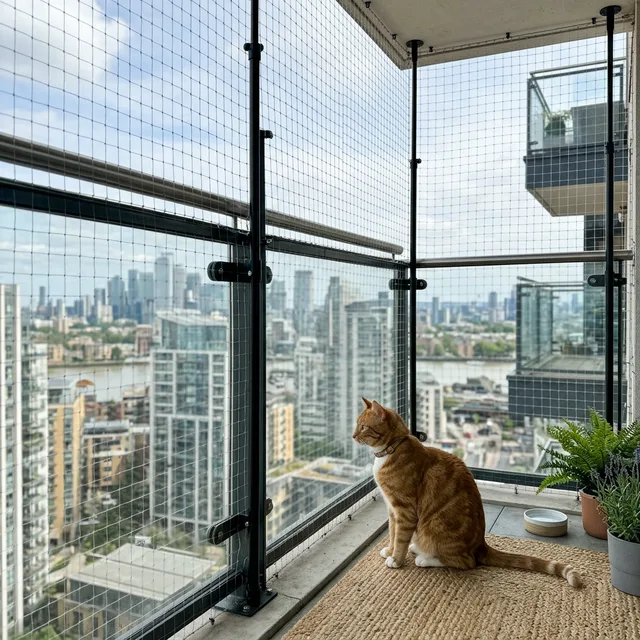
If you live on the 7th floor with a curious tabby, your balcony isn’t a relaxation zone — it’s a high-stakes anxiety trigger. Cats are incredibly agile, but they are also impulsive. A passing pigeon or a moth can lead to a “high-rise syndrome” fall that is every pet owner’s nightmare. More ideas: cat tree alternatives. For the full setup, see our balcony gardening hub.
For renters, the challenge is double-edged. You need a safety barrier that is 100% escape-proof, but you can’t drill into the building’s exterior masonry or install permanent metal cages without losing your $2,500 security deposit.
Why trust this guide? I have lived with three cats in high-rise rentals for a decade. I have navigated strict HOA rules and “no alteration” lease clauses while ensuring my pets can enjoy the fresh air safely. This setup has survived two moves and three different balcony configurations.
Materials & Tools Needed
| Item | Approx Cost ($) | DIY Time |
|---|---|---|
| Transparent cat safety netting (10×15 ft) | $35 | – |
| Telescopic poles (set of 4) | $60 | – |
| Heavy-duty zip ties (UV-resistant) | $8 | – |
| Measuring tape | $0 | – |
| Total | $103 | 90 min |
Assess Your Urban Space (Preparation Phase)
Before ordering netting, determine your balcony’s anchoring potential:
- Top rail to ceiling? If you have a balcony above yours, you can use tension poles (telescopic) that jam between your floor and your neighbor’s floor. No drilling required.
- Open top? If you’re on the top floor, you’ll need a “caged” DIY enclosure or a freestanding catio.
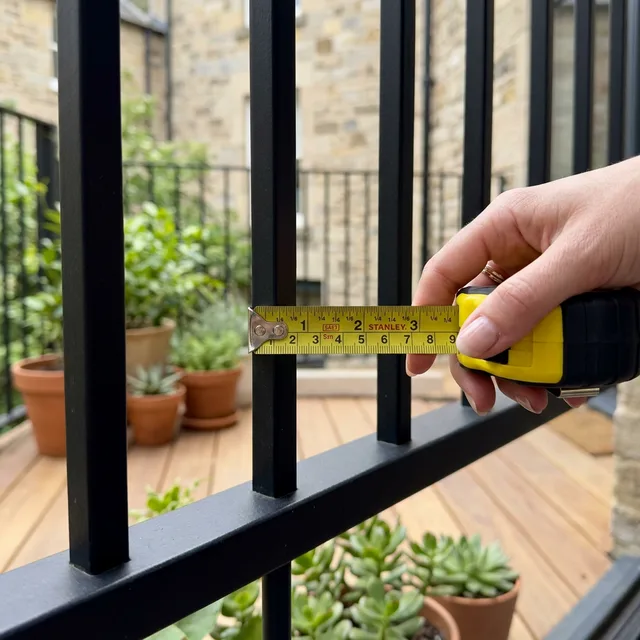
- Railing gap? If your cat is a kitten or a lean breed like a Siamese, measure the gaps in your railing. Anything wider than 2 inches needs to be screened with mesh, even if you have floor-to-ceiling netting.
Step-by-Step Execution: The Telescopic Pole Method
This is the most “renter-safe” way to install netting because it relies on pressure, not fasteners.
Step 1: Install Telescopic Poles
Place your telescopic poles at each corner of the balcony. Extend them until they are tight against the balcony above you. Most “cat safety” poles feature a curved top to prevent cats from climbing over the netting.
- Micro-Fail Warning: Do not use cheap curtain tension rods. Use dedicated pet safety poles. A cat jumping against the netting exerts significant force; a curtain rod will snap or slip, leading to a catastrophic failure.
Step 2: Clear the Railing Base
Ensure the bottom of the netting is flush with the floor. Many cats try to “squeeze” under the netting rather than climb over it. Use heavy-duty zip ties to secure the bottom edge of the netting to the base of your railing every 6 inches.
Step 3: Thread and Tension the Netting
Thread the suspension rope (usually included with cat nets) through the top edge of the netting. Attach it to the hooks on your telescopic poles. Pull it taut — if the netting is “baggy,” a cat can get tangled in it, which creates a strangulation hazard.
- Pro-Tip Checklist:
- Use transparent netting (reinforced with wire) — it’s nearly invisible from the street, which keeps your landlord from noticing and complaining.
- Check the zip ties every 3 months. UV rays make cheap plastic brittle; always buy UV-stabilized ties.
Is it safe to let my cat on a balcony with just netting?
Yes, it is safe provided you use wire-reinforced transparent cat safety netting and a secure anchoring system like telescopic tension poles. High-rise syndrome—injuries sustained from falls—is a major cause of domestic cat fatalities in urban areas. A proper cat-proof enclosure should be at least 6.5 feet (2 meters) high or, ideally, fully enclosed from floor to ceiling. Standard bug screens are not sufficient, as a cat’s claws can easily tear through the mesh. The netting should have a mesh size no larger than 1.2 x 1.2 inches (3×3 cm) to prevent a cat’s head from becoming stuck. Even with a secure enclosure, never leave your cat unsupervised on the balcony for extended periods, especially during extreme temperatures.
Common Mistakes & Course Correction
- Using bird netting instead of cat netting. Bird netting is thin and can easily snap under a cat’s weight or be chewed through. Only use netting specifically rated for pets.
- Leaving the bottom gap open. Cats are “liquid.” If their head fits, their body fits. Secure the bottom edge of the net to the floor track or railing base using zip ties or a weighted timber beam.
- Assuming the cat won’t climb. Some cats are climbers. If your net doesn’t go all the way to the ceiling, ensure the top of the poles have an inward-curving bracket to stop them from scaling the wall.
Conclusion
Cat-proofing doesn’t have to look like a prison. With transparent netting and tension poles, you can create a safe “Catio” that is invisible to the neighbors and 100% safe for your pet. Give your cat the outdoor time they crave without the 7th-floor risk.
Safe cat. Happy renter.
Safety Disclaimer
Inspect your netting and zip ties monthly for signs of wear or chewing. If your cat is an aggressive chewer, consider a metal-mesh enclosure instead. Never leave your cat on the balcony when you are not home.
