
Quick-Choice Matrix | Balcony Type | Best For | Top Pick | |:————————— |:————————— |:————————- | | Strict Rental (No Drill) | Railing-mounted safety | Lechuza Balconera Color | | Windy High-Rise | Heavy, low center of gravity | Keter Urban Bloomer | | Full Sun / Heatwave | Massive water reservoir | Glowpear Urban Garden | | Zero Floor Space | Vertical hanging integration | Windowbox Cascading System |
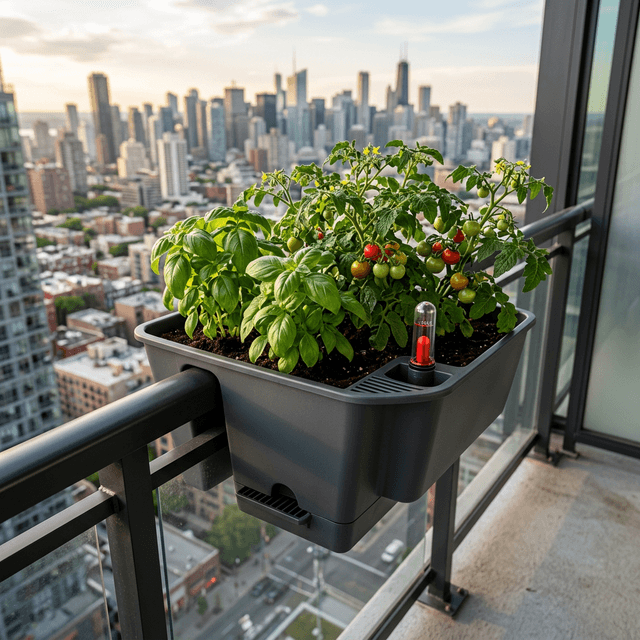
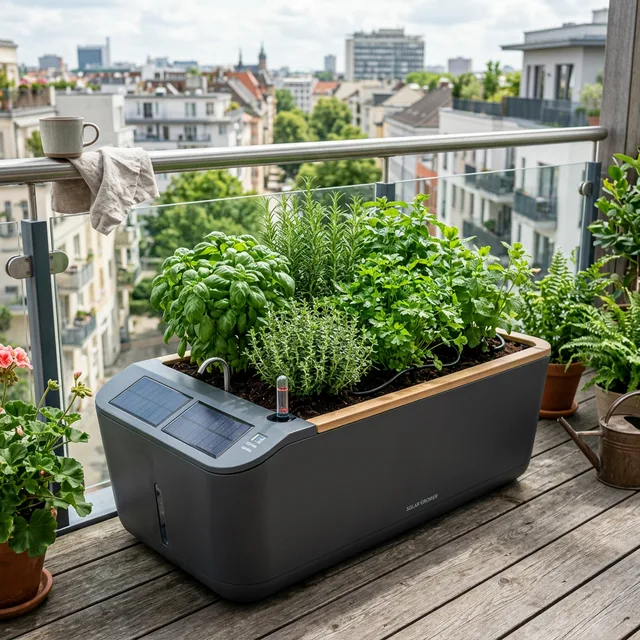
How Smart Self-Watering Balcony Planters Work in Small Spaces A traditional plastic pot features simple drainage holes at the absolute bottom. When you pour water directly over the topsoil, gravity pulls the water downward, instantly washing vital nitrogen out of the bottom holes and onto your neighbor’s clean laundry below. This creates violent territorial disputes in tight apartment complexes. Conversely, a sub-irrigation system isolates the water. A false floor separates the potting soil from a massive lower liquid reservoir. Thick capillary action wicks (fabric ropes or specialized soil cones) pull water vertically up into the root zone only as the plant dries out. A glaring mechanical red float-valve indicates when the internal reservoir hits empty. You pour water directly into a designated side tube, bypassing the topsoil and guaranteeing zero external dripping.
How to Choose Smart Self-Watering Balcony Planters for a Small Balcony Evaluating urban gardening gear requires intense pragmatism. When assessing planters for a 2-square-meter concrete slab, I instantly ignore aesthetic ceramic pots. Ceramic is devastatingly heavy, fractures during winter freezes, and offers zero water retention. I filter for:
- Railing Clamp Integrity: If a heavy planter falls from the 10th floor, it is a catastrophic liability. The bracket system must feature heavy-gauge steel hooks with adjustable kinetic tightening screws, avoiding permanent wall drilling.
- Reservoir Volume: A microscopic 1-liter tank will boil dry in two aggressive summer days. A legitimate smart planter must hold a minimum of 4 liters to grant you a two-week vacation.
- Internal Overflow Valves: Renters cannot afford to flood their own balconies. The planter must possess an external drainage plug to vent excess rainwater during a violent thunderstorm, preventing root rot while protecting the concrete slab from water damage.
What is the best smart self-watering balcony planter for renters? The absolute best smart self-watering balcony planter for strict renters is the Lechuza Balconera Color 50. It utilizes a advanced, hidden steel mounting bracket that secures the heavy box over a standard iron balcony railing without requiring any destructive wall drilling. The internal sub-irrigation system features a robust 3-liter water capacity, easily sustaining urban herbs for up to 12 days without manual intervention. Crucially, the Lechuza system incorporates removable inner planting liners. You can easily lift the entire soil block out by its handles to prune the roots inside your kitchen sink, ensuring zero dirt or muddy water ever hits your pristine balcony floor or drips onto the neighbor below.
Best 4 Smart Self-Watering Balcony Planters for Urban Renters
- Lechuza Balconera Color 50 The German-engineered Lechuza is the undisputed apex predator of urban gardening. Measuring 20 inches wide, it precisely fits the standard segmented iron railings of modern studio flats. The outer plastic shell remains permanently strapped to your railing, while the internal drop-in liner houses the plants and soil. When a sudden winter frost approaches, you rip the liner out by its hidden handles and carry the plants inside, leaving the heavy shell outside. The mechanical water level indicator is incredibly accurate, definitively telling you when the reservoir drops to critical levels.
- Real-World Application: Ideal for strict no-drill rental balconies where heavy winds require an impenetrable steel bracket grip.
- Risk & Safety Notes: The proprietary steel mounting brackets are sold separately. You must purchase them to ensure absolute safety on high-rise railings.
- ✅ Pros:
- Removable inner planting liner for mess-free indoor maintenance.
- High-impact, UV-resistant resin refuses to crack in freezing weather.
- ❌ Cons/Limitations:
- Expensive upfront investment.
- The heavy steel brackets cost extra.
- Glowpear Urban Garden Planter If you are attempting to grow demanding, water-heavy vegetables like heirloom tomatoes on a searing hot, south-facing balcony, the Glowpear is your industrial-grade tank. It features a massive, 13-liter built-in water reservoir. While traditional pots require daily watering during July heatwaves, the Glowpear easily sustains heavy summer crops for three weeks. It is incredibly deep, providing aggressive root space for large fruiting plants. The system visually integrates into hyper-modern, minimalist grey apartment aesthetics.
- Real-World Application: Ideal for south-facing, extreme-heat balconies where traditional pots evaporate dry in 14 hours.
- Risk & Safety Notes: When fully loaded with wet soil and 13 liters of water, this unit is devastatingly heavy. Never place this on a fragile glass table; leave it on the load-bearing concrete floor.
- ✅ Pros:
- Massive, vacation-proof water reservoir.
- Interlocking design allows you to chain multiple units together.
- ❌ Cons/Limitations:
- Takes up significant floor space.
- Extremely heavy when at full capacity.
- Keter Urban Bloomer Raised Bed When your tiny apartment lacks decent sunlight, you must elevate your plants into the air to catch the sun over the concrete railing. The Keter Urban Bloomer is a raised, freestanding container. Standing 31 inches tall, it functions as an ergonomic gardening station. You never have to bend over to harvest your parsley, saving your lower back. The internal water gauge is visible, and the bottom shelf provides an excellent storage footprint for your spare potting soil and organic fertilizers, acting as an outdoor utility closet.
- Real-World Application: Perfect for older renters with bad knees or balconies with solid concrete walls that block floor-level sunlight.
- Risk & Safety Notes: Because the center of gravity is exceptionally high, a violent 50mph wind gust can tip the unit over. You must defensively push it tight against an architectural wall during severe storms.
- ✅ Pros:
- Ergonomic standing height saves your spine.
- Built-in lower storage rack maximizes vertical utility.
- ❌ Cons/Limitations:
- High center of gravity makes it vulnerable to extreme wind.
- Visually bulky in microscopically small spaces.
- Windowbox Cascading Sometimes, you possess zero floor space because your bicycle dominates the balcony. You must push your garden to the absolute edge. This system utilizes deep, narrow plastic troughs that hang aggressively over the outside of your railing, utilizing literal thin air. The internal capillary matting pulls moisture up efficiently to sustain shallow-rooting herbs like thyme and oregano.
- Real-World Application: Best for ultra-micro apartments where every square inch of the actual floor is already occupied.
- Risk & Safety Notes: You must meticulously verify your rental contract. Many aggressive building management companies prohibit hanging any object over the exterior side of the railing due to lethal drop hazards.
- ✅ Pros:
- Consumes mathematically zero floor space.
- Excellent for trailing, vining plants like ivy or creeping thyme.
- ❌ Cons/Limitations:
- Shallow depth prevents growing deep-rooting vegetables.
- Often violates strict high-rise HOA exterior policies.
